BPC-157 + TB-500 20mg — Research Peptide, Canada
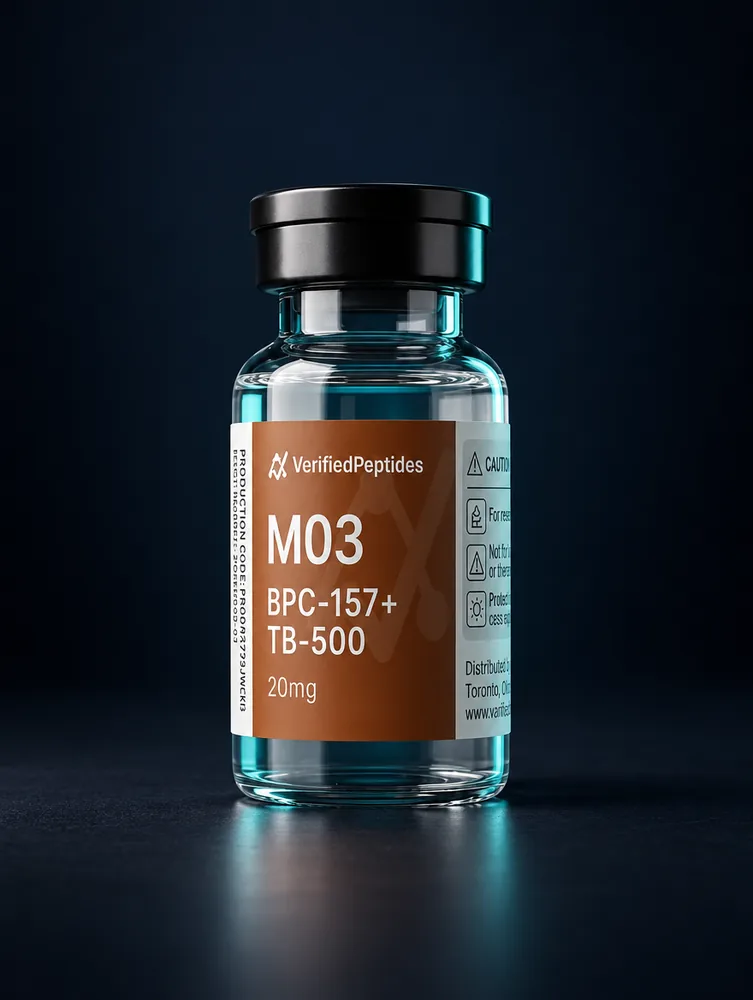
BPC-157 + TB-500 20mg, lyophilized laboratory research material. Confirm identity and content on the batch documentation.
Price: $151 CAD
About this product
This lyophilized research blend contains 10mg BPC-157 and 10mg TB-500, 20mg total. BPC-157 is a synthetic 15-residue peptide with molecular weight approximately 1,419.55 Da. TB-500 requires the exact thymosin beta-4-related sequence and terminal modifications to be confirmed in the lot documentation. The blend has no single individual-compound molecular weight. Each component lot is tested. Input-lot testing and analysis of the finished blend have different scopes; request documentation showing which material was sampled and which component identities and contents were measured. A total labelled mass alone does not establish the measured ratio.
Published preclinical work examines nitric-oxide-associated signalling for BPC-157 and actin-related pathways for thymosin-related material. A mixed preparation is not assumed to have an additive or synergistic mechanism. Identity and content of each component must remain distinguishable in the records. Findings about separate compounds cannot automatically be assigned to a blend.
Verification starts with a defined lot and the identity of the sample submitted. Every batch is tested by an independent third-party laboratory. Review HPLC purity and mass-spectrometry evidence together: chromatography describes detected components under its method, while compatible molecular mass supports the documented identity. A main-peak area percentage is not automatically purity by mass or net peptide content. Neither method independently establishes sterility, endotoxin status or activity in an experimental system. Read the COA guide and verification process for these distinctions. Match the full lot identifier and compound name on the certificate with the vial. Keep the test date, laboratory identity and analytical scope with the receiving record. If a measurement is absent, record it as unspecified rather than inferring it from an unrelated report.
Storage and handling should follow the compound- and formulation-specific technical documentation. Keep lyophilized material sealed, protected from moisture and light, and record receipt date, storage location and any environmental excursions. Do not infer a universal shelf life from the compound name or assume that the report describes all handling after sampling. Maintain the original lot identifier when material enters laboratory inventory. A damaged vial, unclear label or certificate mismatch should remain a receiving discrepancy until resolved. The laboratory storage guide covers general documentation practices, not experimental preparation instructions.
Sourcing in Canada begins with the current BPC-157 + TB-500 20mg listing and its research category. Keep the product description, CAD invoice, delivery record and lot certificate together for institutional review. The COA library is the public location for available reports; an absent or pending download is a publication state rather than a certificate. Email sales@verifiedpeptides.ca with the exact compound, lot identifier and order number if documentation is missing. Do not substitute a neighbouring lot's report. Read the compound overview for additional identity context. Availability and shipping arrangements should be confirmed on the current listing and policy pages, not inferred from a general article.
Product specifications
| Presentation | BPC-157 + TB-500 20mg |
|---|---|
| Form | Lyophilized powder |
| Use | Laboratory research only |
Canadian fulfilment
- Ships from within Canada (Kingston, Ontario) via Canada Post.
- Dispatch in 1–2 business days after payment confirmation.
- All pricing in CAD.
- Payment methods: Interac e-Transfer, Credit card.
- Free shipping over $350 CAD (tax-inclusive); flat $35 CAD otherwise.
- Plain, unmarked packaging with no external branding.
Frequently asked questions
What is BPC-157 + TB-500 20mg?
This lyophilized research blend contains 10mg BPC-157 and 10mg TB-500, 20mg total. BPC-157 is a synthetic 15-residue peptide with molecular weight approximately 1,419.55 Da. TB-500 requires the exact thymosin beta-4-related sequence and terminal modifications to be confirmed in the lot documentation. The blend has no single individual-compound molecular weight. Each component lot is tested. Input-lot testing and analysis of the finished blend have different scopes; request documentation showing which material was sampled and which component identities and contents were measured. A total labelled mass alone does not establish the measured ratio.
How is this research material verified?
Each batch is tested by an independent third-party laboratory. Match the certificate to the vial lot, then review HPLC purity, molecular-mass evidence and any measured content separately. A missing analytical item must remain unspecified; a product description does not supply the evidence for an unpublished lot.
How should the material be stored?
Follow the formulation-specific technical documentation. Keep sealed lyophilized material dry and protected from light, record its storage history and preserve the lot identifier. The certificate describes the submitted sample and does not establish every condition after it was tested.
Where can I source BPC-157 + TB-500 20mg in Canada?
Use the current product listing and category collection, confirm availability and retain the CAD invoice with the batch documentation. Request a missing certificate by email using the exact lot identifier. These materials are supplied strictly for laboratory research use only.
Does testing establish suitability beyond laboratory research?
No. Chemical identity and chromatographic purity are analytical evidence with a defined scope. They do not establish pharmaceutical suitability, sterility or endotoxin status unless the relevant tests are explicitly documented. The institution determines its research acceptance requirements.
Related research products
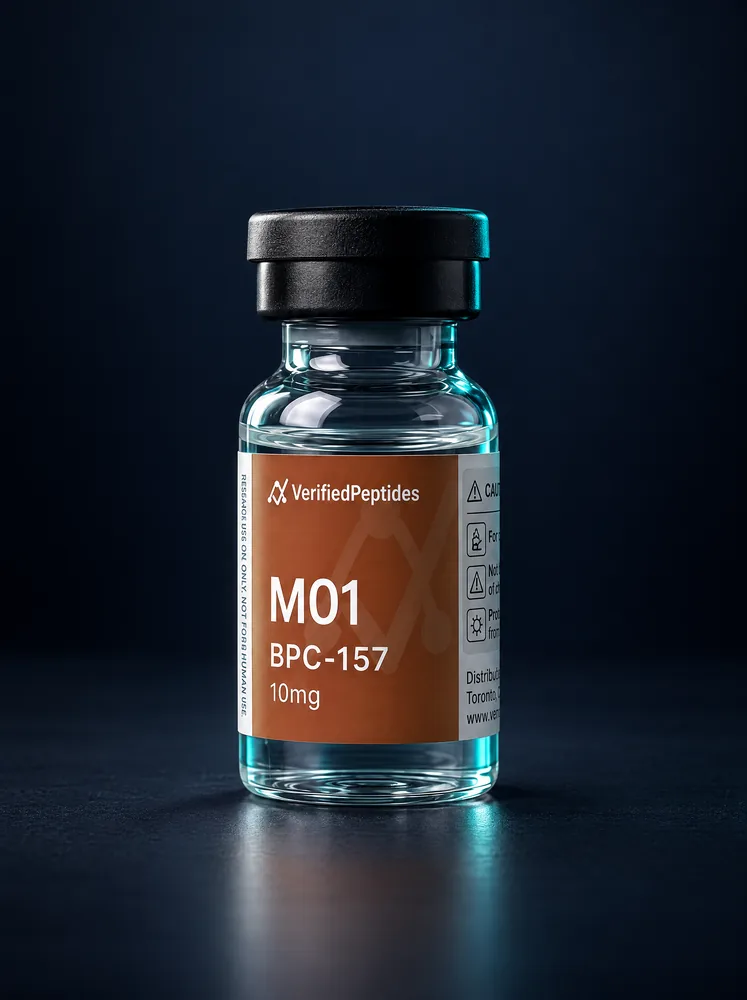 BPC-157 10mg — $84.00 CAD
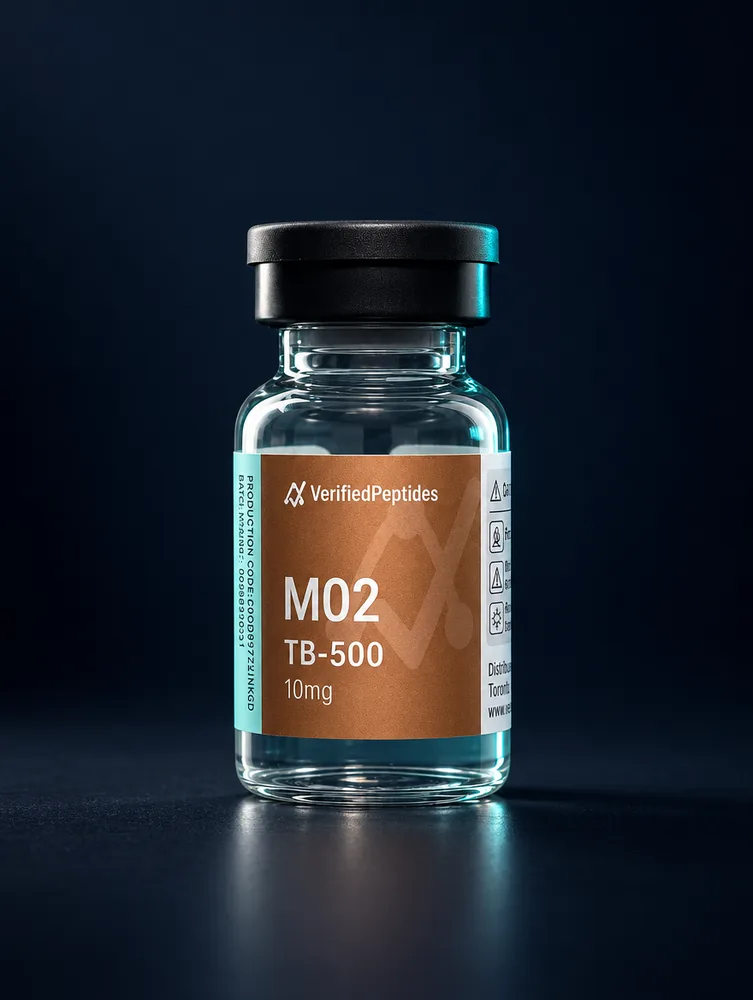 TB-500 10mg — $87 CAD
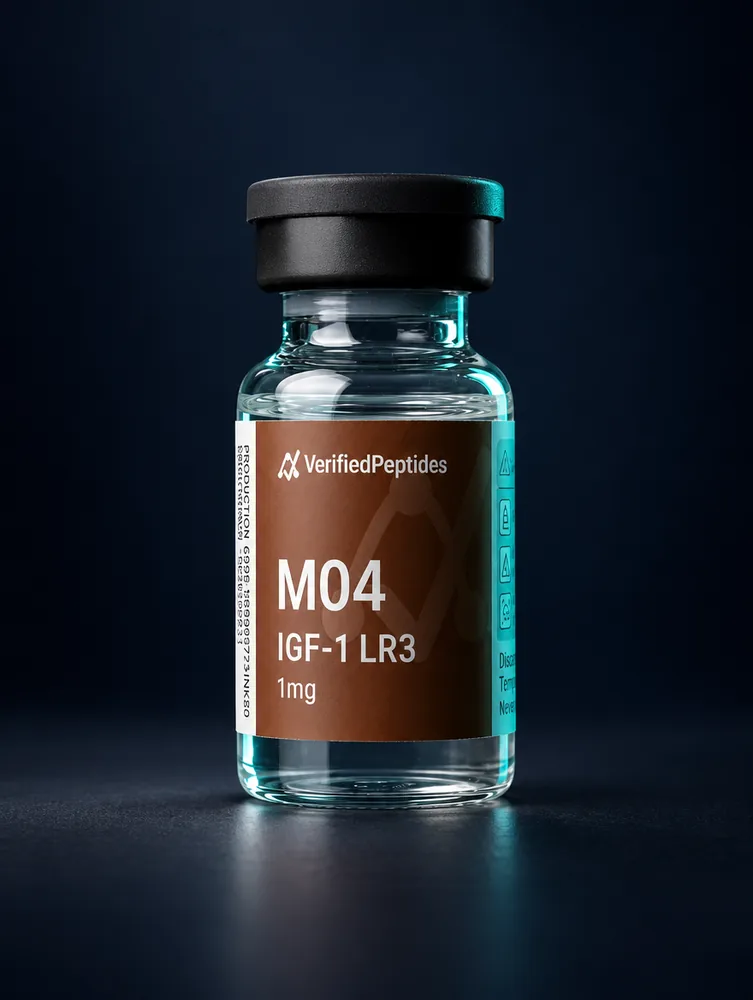 IGF-1 LR3 1mg — $94.00 CAD
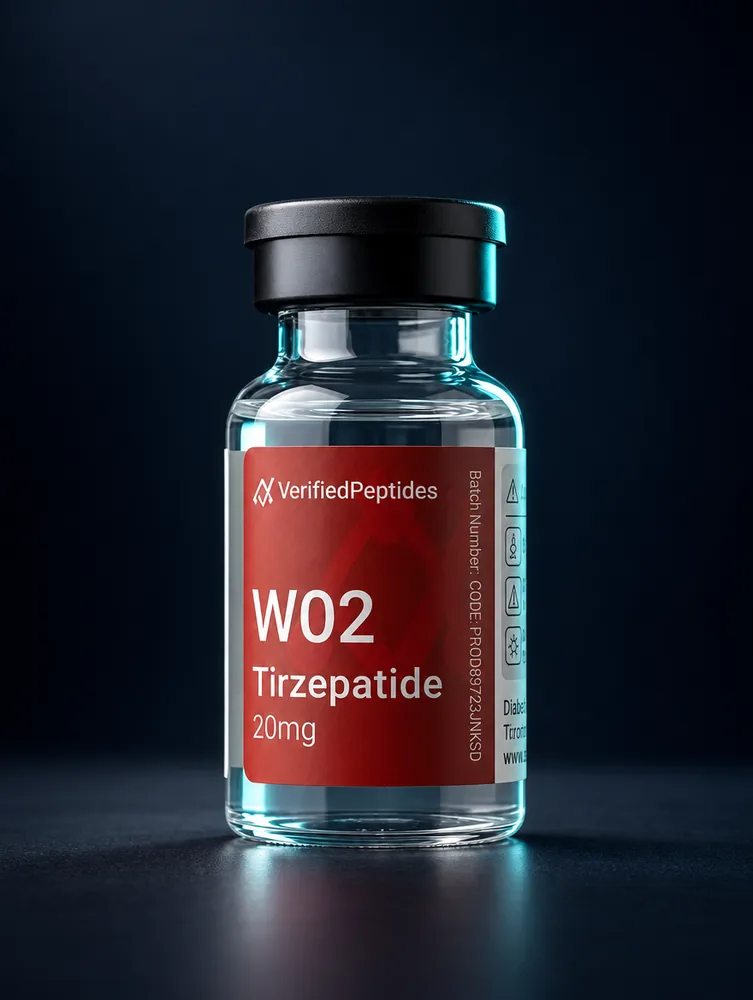 Tirzepatide 20mg — $112 CAD
Scientific Description
BPC-157 + TB-500 research peptide blend contains two separately named peptide materials in a single laboratory preparation. BPC-157 is a synthetic 15-residue peptide, CAS 137525-51-0, with molecular weight approximately 1,419.55 Da. TB-500 nomenclature requires sequence confirmation against the lot documentation. The blend has no single molecular weight or individual-compound CAS number. In Canada, it is studied in laboratory settings where the identity and amount of each component must be documented separately.
Mechanism of Action
The components are investigated in cell and animal models of nitric oxide-associated signalling and actin-related pathways. Combination assays examine individual and combined molecular responses; an additive or synergistic mechanism is not assumed.
Research Applications
- Comparative single-component and blend assays
- Nitric oxide-associated signalling studies
- Actin-related cell migration models
- Component identity and analytical separation studies
Storage & Handling
Store lyophilized powder at 2-8°C, protect from light.
For laboratory research use only. Not for human or veterinary use.